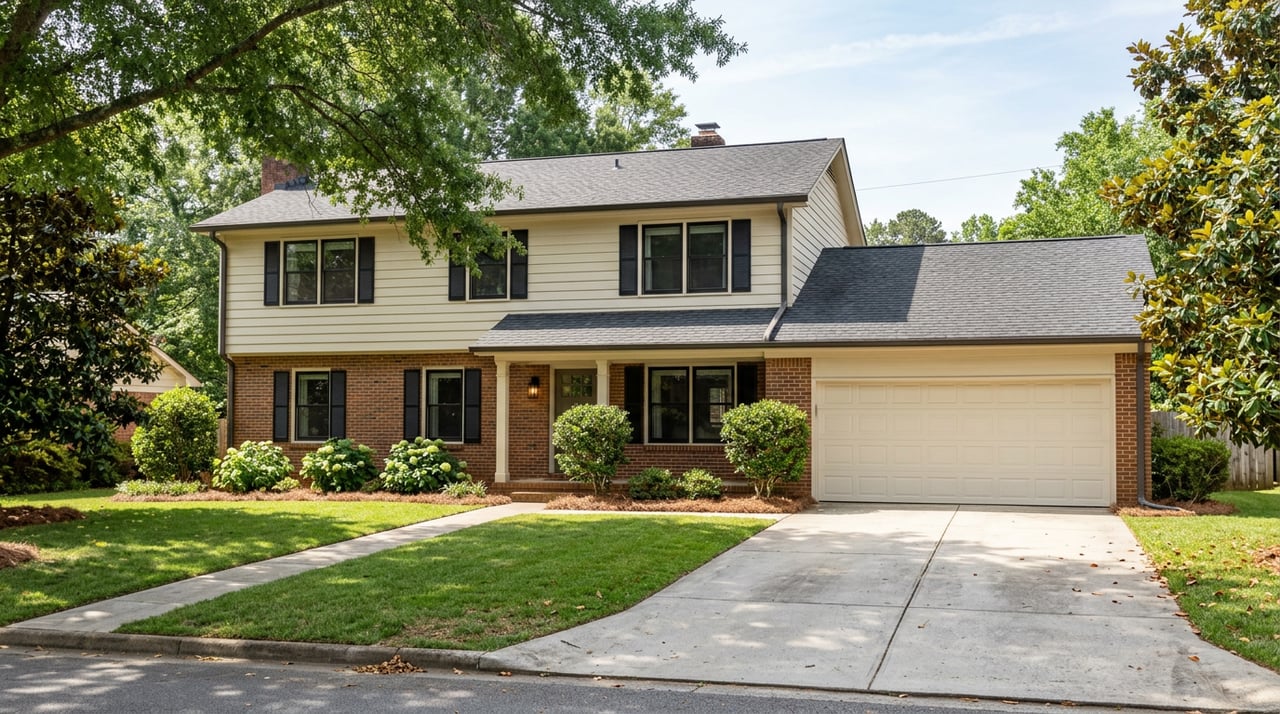
Outgrowing your Douglasville home and wondering how to upsize without stress? You are not alone. Many West Georgia families are juggling school calendars, interest rates, and tight timelines while eyeing a bigger yard or an extra bedroom. In this guide, you will learn how to time your sale and purchase, understand your equity, compare financing options, and handle Georgia-specific steps so you can move with confidence. Let’s dive in.
Douglasville market snapshot for move-up buyers
If you are moving up in Douglasville, pricing and pace matter. Recent reports show the median listing price around $340,000 as of December 2025, while one major index estimates a typical local value near $301,548 through late November 2025. These sources use different data and geographies, which is why your most reliable number is a current CMA tailored to your neighborhood and price band.
Inventory and days on market vary by segment. One report showed roughly 640 active listings with average days on market near 71 days late in the year, while another estimated a median of about 52 days to go pending. Higher-priced tiers often move differently than entry-level homes. A local CMA and on-the-ground showing trends will help you set realistic expectations for both selling and buying.
Know your equity and budget
Calculate likely sale proceeds
Your working formula is simple: estimated market value minus your mortgage payoff and typical seller closing costs equals your available equity. Fannie Mae describes equity as the difference between today’s value and your outstanding loan balances. Start by requesting a fresh CMA and a payoff statement from your lender so you are modeling real numbers, not guesses. Sellers commonly budget 6 to 10 percent of the sale price for commissions and closing-related items, but a custom net sheet is the best way to see your bottom line.
For a clear walk-through of loan basics and planning, review Fannie Mae’s guide to understanding home loans. It can help you frame conversations with your lender about affordability and next steps.
- Resource: See how equity works in Fannie Mae’s overview of home loan basics: Fannie Mae on loan basics
Rate environment and timing
Nationally, 30-year fixed mortgage rates dipped below 6 percent in late February 2026. This improves purchasing power for many buyers and can widen your window to act. Rates change weekly, so get a written pre-approval and updated quotes when you are ready to write. Timing your sale and purchase around rate moves can make a meaningful difference to your monthly payment.
- Market context: Learn how sub-6 percent rates affect buyers in this summary: Mortgage rates fell below 6 percent
Down payment and PMI
If you put less than 20 percent down with a conventional loan, private mortgage insurance (PMI) typically applies. Your lender can model the monthly impact at different down payment levels so you can decide whether keeping cash for renovations or reserves makes sense. You can also discuss PMI removal paths as your equity grows.
- Primer: Review common PMI questions in Fannie Mae’s FAQ: Fannie Mae homebuyer FAQ
Choose your move-up strategy
Sell first, then buy
This path lowers financing complexity and removes the risk of being stuck with two mortgages. You might need temporary housing between closings, but your purchase offer will be clean and your budget clear. If local inventory is healthy in your target price range, this strategy can feel calm and controlled.
Buy first with bridge or HELOC
If you find the right home before you sell, buying first can work when you have a clear exit plan.
- Bridge loan: A short-term loan that helps fund your purchase before you sell. These often close quickly and may be interest-only for 6 to 12 months, but they usually come with higher rates and fees. Model a longer-than-expected sale timeline and confirm you can cover both obligations if needed. Learn the basics here: Bridge financing explained
- HELOC: A home equity line of credit secured by your current home. Many buyers draw funds for a down payment, then pay it off with sale proceeds. HELOCs often have variable rates and transition from draw to repayment periods, so it is important to know your terms. See consumer guidance here: CFPB on HELOCs
Always pair buy-first strategies with a strong pre-approval that shows your allowable debt ratios and your documented exit plan.
Make a contingent offer
You can make your purchase contingent on the sale or closing of your current home. In softer markets, sellers may accept this, especially with a realistic list price and solid proof of financing. Many sellers add a kick-out clause that allows them to keep showing the home and gives you a short window to remove your contingency if a stronger offer appears. Review the mechanics and tradeoffs here: NAR guide to contract contingencies
Timeline that works in Georgia
90 to 120 days out
- Get a CMA and a mortgage payoff statement.
- Meet with a lender for pre-approval and discuss bridge or HELOC options.
- Consider a pre-listing inspection to surface repairs early.
- Collect bids for any must-do fixes.
60 days out
- Decide: sell first, buy first, or write a contingent offer.
- Prep your home for market with decluttering, deep cleaning, paint, and yard care.
- Schedule professional photos and light staging.
30 days out
- If selling first, list and review offers with an eye on contingencies and timelines.
- If buying first, keep documents current and your exit plan in writing.
- Negotiate clear contingency windows and any needed rent-back terms.
Contract to closing
In Georgia, most closings take 30 to 45 days, depending on financing and title work. Georgia closings are attorney-led, so plan for attorney fees and confirm wiring instructions with the closing office and your lender. Review your transfer tax and recording steps in advance.
- Georgia closing practice overview: Attorney-led closings in Georgia
- Transfer tax and PT-61 filing: Georgia assesses a transfer tax of $1 per $1,000 or fraction of consideration, paid at recording with a PT-61 declaration. Read the rule: Georgia PT-61 transfer tax requirements
Prep your Douglasville home to sell
Quick, high-impact fixes
Start with decluttering, deep cleaning, neutral paint, and curb appeal. These updates photograph well and help buyers focus on space, not stuff. A pre-listing inspection can help you address small issues before they become negotiation hurdles, and it can speed up due diligence.
- Staging insights: Many listing agents report staging reduces time on market and can modestly improve offers. See the summary of national staging findings: NAR report highlights on staging
What renovations pay off
Smaller, targeted projects often outperform big-ticket remodels. A basic kitchen refresh, front entry improvements, and exterior paint tend to return more than high-end overhauls. Before investing, get local contractor estimates and talk through ROI by price point.
- Compare national project ROI to guide priorities: Cost vs. Value report
Marketing that moves the needle
Professional photography, light staging of key rooms, and strong listing copy help your home stand out. For vacant spaces, virtual staging can be effective and budget friendly. Ask for a marketing calendar so you know when photos, listing launch, open houses, and follow-up campaigns will happen.
Georgia taxes and homeowner paperwork
- Transfer tax: Budget for Georgia’s state transfer tax at closing. It must be paid before recording, along with the PT-61 form noted above.
- Property tax and homestead: In Douglas County, homestead exemption applications are handled by the Tax Commissioner’s office, with an April 1 filing deadline to qualify for the year. For parcel-level questions or homestead details, visit the county’s resource: Douglas County homestead FAQs
- Federal gain exclusion: If you have used the home as your primary residence and meet ownership and use tests, you may exclude up to $250,000 of gain, or $500,000 if married filing jointly. Review worksheets and exceptions here and consult a tax advisor for your specific situation: IRS Publication 523
School-year and neighborhood timing
If move timing around the school year matters to you, map enrollment dates and proof-of-residency requirements early. School assignment and timing can influence demand in certain neighborhoods, and it may shape your ideal closing window. Plan showings and offers around testing weeks, holidays, and summer breaks to reduce stress.
How Karen guides your move-up
When you are upsizing, you are managing two big moves at once. You deserve a calm, coordinated plan. Here is how we help:
- Local pricing power: A data-backed CMA by neighborhood and price band so you list well and shop wisely.
- Strategy first: Side-by-side comparisons of sell-first, buy-first, or contingent paths tailored to your finances and timeline.
- Construction-aware prep: Practical advice on repairs and quick upgrades that add value without overspending.
- White-glove marketing: Staging guidance, professional photography, and a clear launch plan.
- Smooth closings: Coordination with lenders and closing attorneys, plus reminders for PT-61, tax prorations, and wire safety.
- Digital tools: Instant home valuation, saved searches, and alerts to act fast when the right home hits the market.
If you are considering a move within the next few months, let’s build your custom timeline and budget. Reach out to Karen Farmer to get started.
FAQs
How long does it take to sell and buy in Douglasville?
- Typical Georgia closings run 30 to 45 days from contract. Days on market vary by price band and neighborhood. Plan additional time if your offer includes sale or finance contingencies.
How do I figure out my home equity and budget?
- Request a CMA for today’s value, get your mortgage payoff, and subtract estimated closing costs to see your projected equity. For a quick primer, review Fannie Mae’s loan basics.
Should I wait for mortgage rates to drop more before moving up?
- Rates recently dipped below 6 percent, which improved affordability for many buyers. Since rates move weekly, focus on the home that fits your life and a payment you can comfortably afford. See recent context: Mortgage rates below 6 percent.
What is a kick-out clause and how does it affect my offer?
- With a kick-out clause, a seller who accepted your contingent offer may continue to show the home and can ask you to remove your contingency within a set window if another offer arrives. Learn more in this overview: NAR guide to contingencies.
What Georgia-specific costs should I expect when selling?
- Budget for typical commissions and closing costs, Georgia’s transfer tax of $1 per $1,000 of consideration, title and attorney fees, and tax prorations. For transfer tax rules, see: PT-61 requirements. For attorney-led closing practices, see: Georgia closing overview.